What Is Enterprise Mobility Management (EMM)?
Enterprise Mobility Management (EMM) is the umbrella term for MDM, MAM, MCM, and identity management working together. Here's what each component covers and when a business actually needs the full stack.
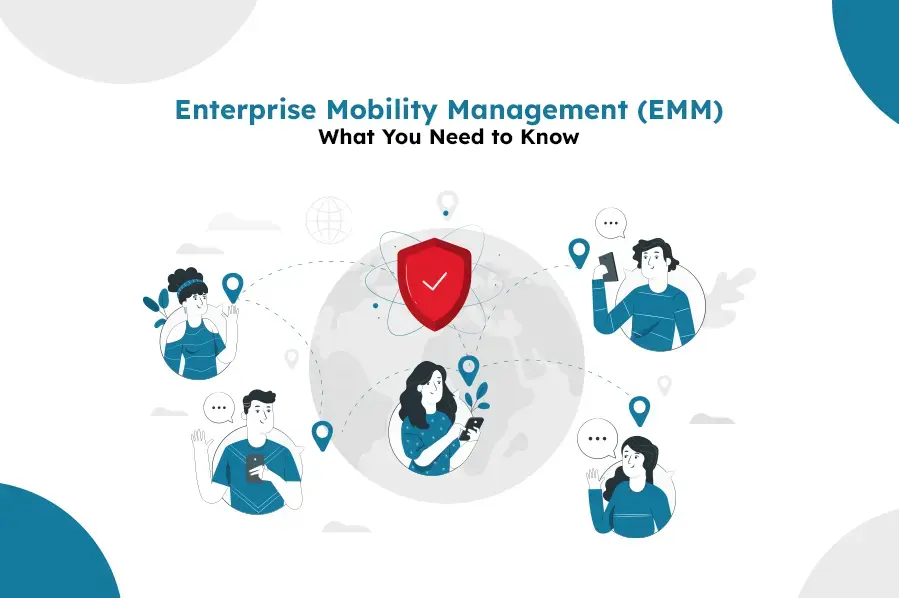
Enterprise Mobility Management (EMM) is the umbrella term for the tools that manage and secure mobile devices, the apps on them, the content they access, and who's allowed to access any of it. It's not one product — it's four components working together, and understanding what each one actually covers is what separates a business that buys the right level of mobility management from one that either over- or under-invests.
The Four Components of EMM
Mobile Device Management (MDM)
The foundation: device enrollment, security policy enforcement, monitoring, and remote lock/wipe.
Mobile Application Management (MAM)
Distribution, configuration, updating, and removal of approved apps — keeping unapproved software off managed devices.
Mobile Content Management (MCM)
Secure file sharing, document access, and encryption for corporate data accessed from mobile devices.
Identity and Access Management (IAM)
Authentication, authorization, and single sign-on — ensuring the right people access the right resources.
For the device-management layer specifically, see what is mobile device management; for how EMM's scope compares to MDM and UEM overall, see MDM vs. EMM vs. UEM.
Benefits of EMM
- Enhanced security through encryption, remote wipe, and access controls across devices, apps, and content.
- Increased productivity from secure, seamless access to corporate resources from anywhere.
- Lower device-management costs through centralized, automated administration.
- Easier regulatory compliance in sectors like healthcare, finance, and legal.
- A better balance of usability and security than managing each layer with separate, disconnected tools.
Common Implementation Challenges
- Complexity — integrating EMM across a diverse device ecosystem takes real planning, especially at scale.
- User resistance — employees may push back over privacy concerns; clear communication about what is and isn't monitored helps.
- Upfront cost — meaningful initial investment that typically pays back through reduced support and incident costs over time.
- Keeping pace with change — EMM strategy needs periodic review as devices, threats, and regulations evolve.
Where EMM Is Headed
AI-assisted threat detection, broader IoT device coverage, and zero-trust security models are the clearest current trends — each building on the same MDM/MAM/MCM/IAM foundation rather than replacing it. For the practical, business-outcome side of adopting EMM, see how EMM transforms business operations.
LimaxLock and Enterprise Mobility Management
LimaxLock covers the device and application layers of EMM natively — MDM policy enforcement, silent app deployment, and content whitelisting through a kiosk browser — for Android fleets that need device and app control without the overhead of a full cross-OS EMM suite.
Frequently Asked Questions
No — MDM is one component inside EMM. MDM manages the device itself; EMM adds application management (MAM), content management (MCM), and identity/access management (IAM) on top. See our full MDM vs. EMM vs. UEM comparison for the complete picture.